Dumbbells for dogs - Ritega

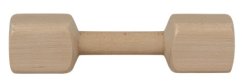
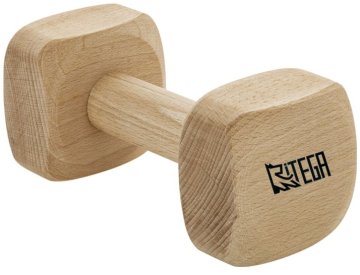
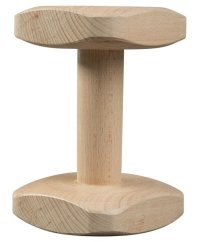
A wooden dog retrieve dumbbell, often referred to as an apport or fetch dumbbell, is an essential training tool for obedience practice, dog sports (IGP, national trial rules), obedience, and hunting training. Our wooden dumbbells are handcrafted by Ritega from solid hardwood and meet official trial regulations.

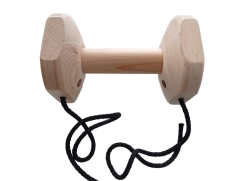
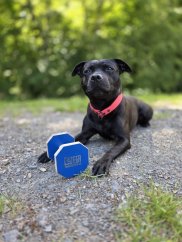
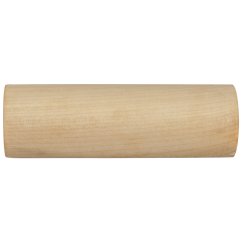
In addition to wooden models, our range includes a lightweight plastic variant and separate accessories – a cord with wooden grips and a replacement center bar for worn-out dumbbells.

Not sure which weight or shape to choose? Check our guide below to select the right dumbbell.
How to choose the right wooden retrieve dumbbell for your dog

Quick selection by purpose

  • For a puppy: 125–150 g, thinner center bar
  • For hobby training: 400–650 g, classic dumbbell
  • For trials (IGP, obedience): 650 g, 1000 g and more, according to trial regulations
1

Weight according to age and breed

  • Puppies and small breeds – 125 to 150 g.
  • Medium breeds and regular training – 400 to 650 g.
  • Large breeds and higher-level official trials – 650 g, 1000 to 2000 g.
2

Material

Hard dried beech wood minimizes the risk of splintering. Cheap dumbbells made of soft wood (spruce, pine) chew up easily, posing a risk of splinters sticking into the gums or tongue.

  • Plastic dumbbell – a lighter and cheaper alternative, better suited as a supplementary toy or for introducing puppies to carrying objects; wood is recommended for sports training and official trials.
3

Thickness of the center bar

The bar should fill roughly 60–70% of the mouth's width. A bar that is too thick falls out of the dog's mouth, while a bar that is too thin forces the dog to crunch it with its molars.

4

Shape of side plates

  • Classic round or slanted side plates – standard fetching, easy to pick up from the ground.
  • Obedience side plates (octagonal/beveled) – stand upright on the surface after being thrown and do not roll far away.

Most common buying mistakes

  • Dumbbell is too heavy – the dog refuses to carry it.
  • Soft wood – chews up quickly, splinter risk.
  • Incorrect bar thickness – the dog mouths/chews it or drops it.
  • Wrong side plate type for the intended purpose (classic vs. obedience).

Who it is suitable for – and who it is not

  • Suitable for: dog sports, obedience, hunting training, regular obedience practice.
  • Not suitable as: a freely accessible chew toy without supervision.

Tip from Ritega: Not sure which variant to choose? Let us know your dog's breed (or age) and whether you plan to compete in trials or are just looking for a garden toy – we'll be happy to help with a specific model. Plus, if a dumbbell gets damaged, you don't have to buy a whole new one – simply replace the worn-out wooden center bar.

Frequently Asked Questions – Wooden Dog Dumbbells

What wooden dumbbell weight should I choose based on breed?
For puppies and small breeds 125–150 g, for medium breeds 400–650 g, for large breeds and official trials 1000–2000 g.
What is the difference between a classic and an obedience dumbbell?
Classic side plates are suitable for standard fetching. Obedience side plates (octagonal/beveled) ensure that the dumbbell stays upright where it lands and doesn't roll away.
Why is a wooden dumbbell better than a plastic one?
High-quality dried wood is sturdy yet gentle on teeth, free from chemical odors, and complies with official trial regulations.
What is a replacement wooden center bar?
A standalone center bar to replace worn-out parts in a dumbbell – you don't need to buy a brand new apport.
Can a dog use the dumbbell as an unsupervised toy?
No, it is a training aid intended for use under handler supervision – unsupervised use leads to excessive chewing and damage.
Do you offer options other than wood?
Yes – our range includes a lighter plastic dumbbell and separate accessories (wooden block on a cord, replacement center bars for worn-out cores).

%s ...
%s
%image %title %code %s
%s